
Aaron Burr
Third vice president, duelist, and alleged conspirator.

via Wikipedia: Aaron Burr · see source
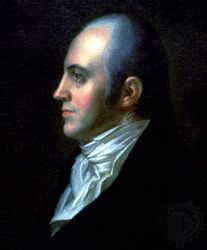
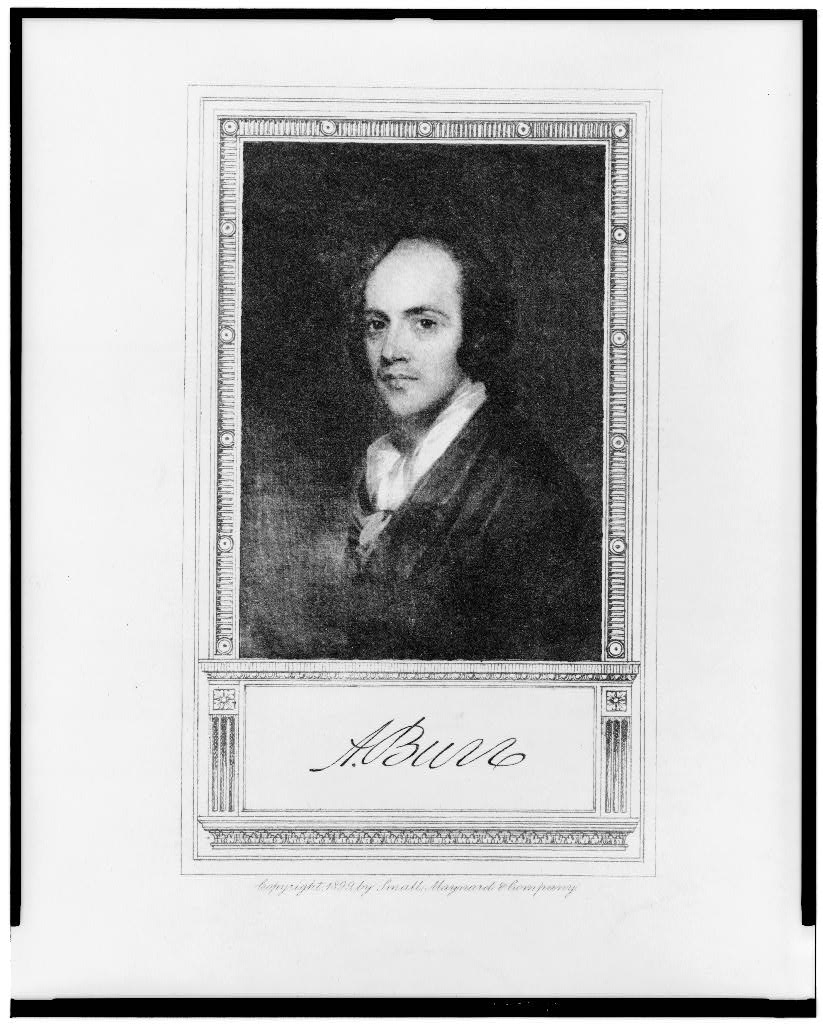
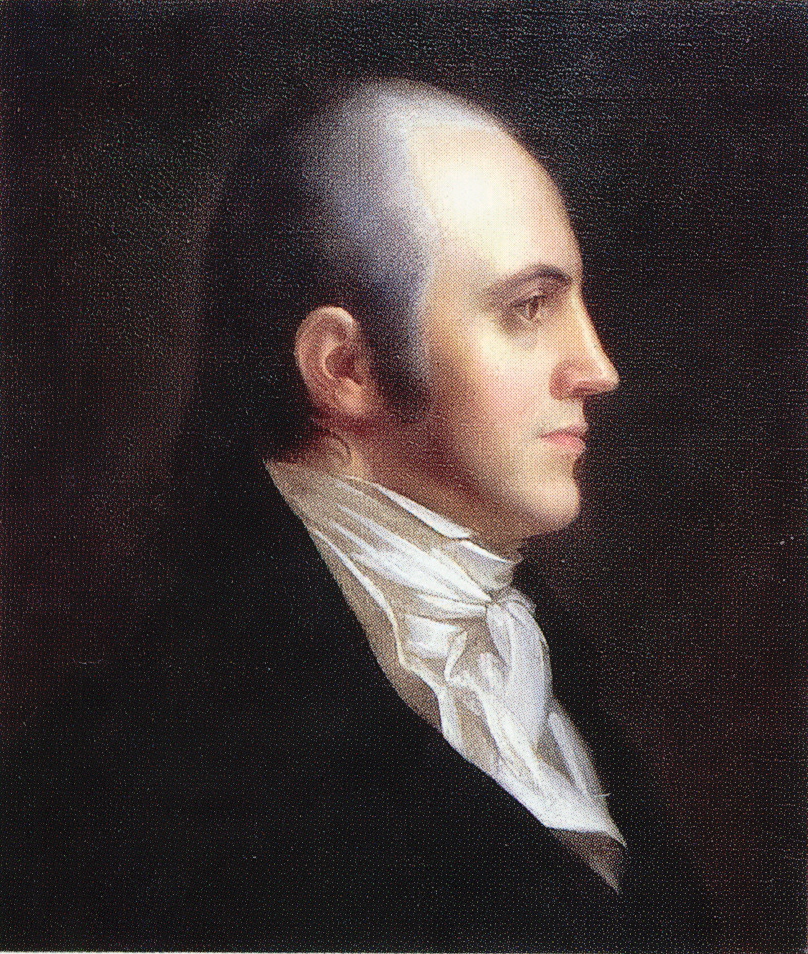
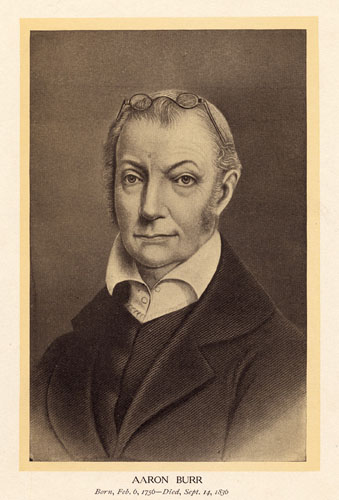
Aaron Burr Jr. (February 6, 1756 – September 14, 1836) was an American politician, businessman, and lawyer who served as the third vice president of the United States from 1801 to 1805, during Thomas Jefferson's first presidential term. A member of the Democratic-Republican Party, he is primarily remembered for the killing of Founding Father Alexander Hamilton in a duel, as well as his conspiracy to take parts of the United States or the Spanish Empire to form an independent country.
- born
- February 6, 1756, Newark, Province of New Jersey
- died
- September 14, 1836, age 80
- field
- Politician, businessman, lawyer
- nationality
- American
- known_for
- Killing Alexander Hamilton in a duel; Burr conspiracy; third vice president of t
Verified Timeline
Lore & Background
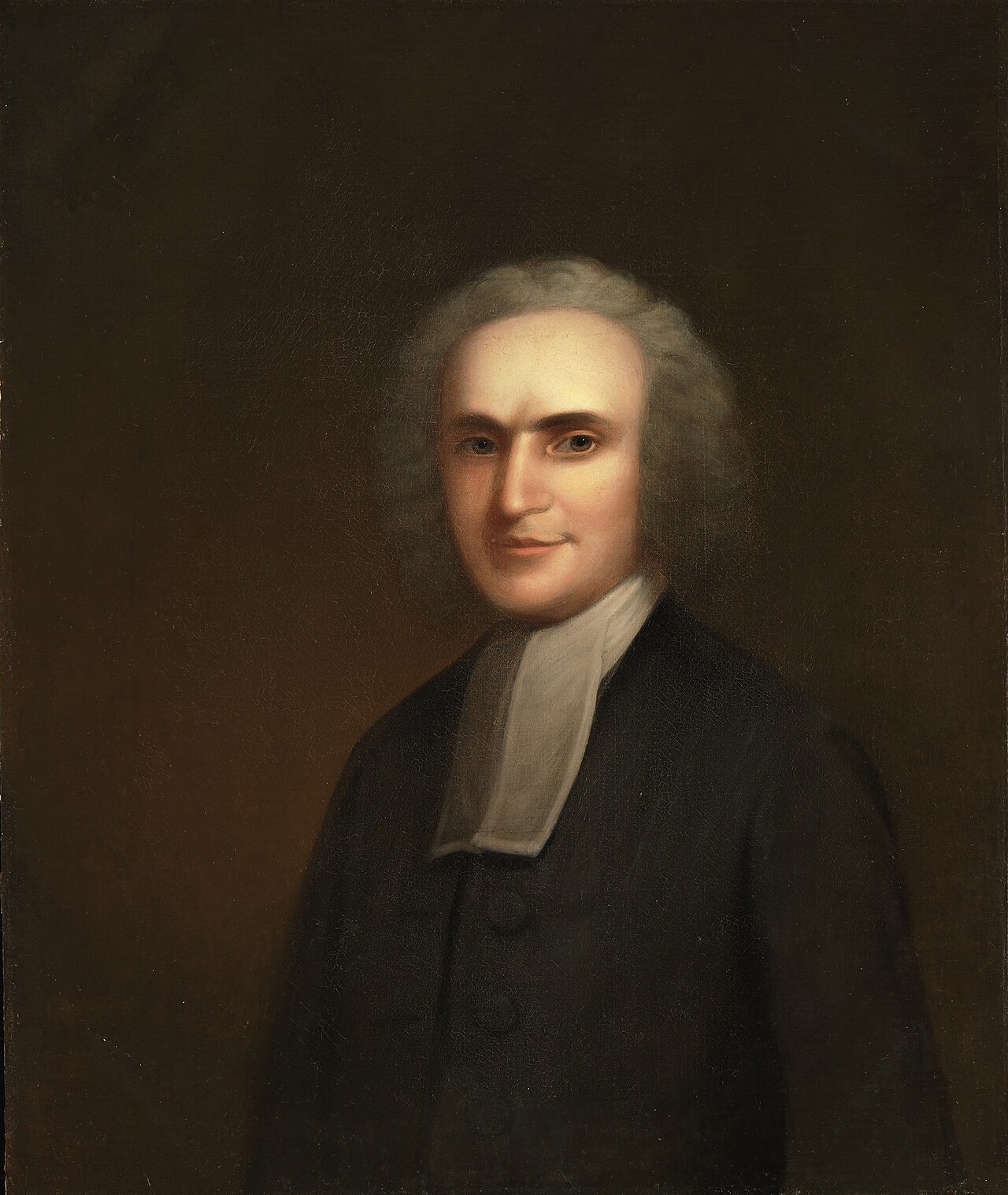
Aaron Burr Jr. was born on February 6, 1756, in Newark, Province of New Jersey, the second child of Reverend Aaron Burr Sr., a Presbyterian minister and co-founder of the College of New Jersey, and Esther Edwards Burr, daughter of philosopher-theologian Jonathan Edwards. By age two, Burr was orphaned after his father died on September 24, 1757, his grandfather Jonathan Edwards on March 22, 1758, his mother Esther on April 7, 1758, and his grandmother Sarah on October 2, 1758. Burr and his sister Sally were placed with the William Shippen family, then with their maternal uncle Timothy Edwards, who was often physically abusive. At 13, Burr entered the College of New Jersey as a sophomore, joining the American Whig Society and Cliosophic Society. He earned his Bachelor of Arts in 1772 at age 16, studied theology for a year, then trained with Joseph Bellamy before switching to law under Tapping Reeve in Litchfield, Connecticut. In 1775, news of the Battles of Lexington and Concord led Burr to enlist in the Continental Army. During the Revolutionary War, Burr joined Colonel Benedict Arnold's expedition to Quebec, a trek of over 300 miles. Arnold praised Burr's 'great spirit and resolution.' Burr was promoted to captain and served as aide-de-camp to General Richard Montgomery, attempting to recover Montgomery's corpse after the Battle of Quebec on December 31, 1775, though he gave up due to harsh snow and the body's dead weight. In 1776, Burr briefly served on George Washington's staff but quit on June 26 to be on the battlefield. He saved an entire brigade from capture after the British landing in Manhattan, but Washington failed to commend him in General Orders, infuriating Burr. Promoted to lieutenant colonel in July 1777, Burr led Malcolm's Additional Continental Regiment, guarding 'the Gulph' at Valley Forge. He quelled a mutiny by emptying his men's guns; when one man fired an empty musket at him, Burr drew his sword and severed the attacker's arm. At the Battle of Monmouth on June 28, 1778, Burr's regiment was devastated by British artillery, and he suffered heatstroke. He resigned in March 1779 due to poor health. On July 5, 1779, he rallied Yale students and Captain James Hillhouse to repel a British advance at the West River in New Haven.
Reader's Guide
Aaron Burr's significance lies in his dual legacy as a high-ranking early American politician and a figure of scandal. As vice president under Thomas Jefferson, he was the first to serve after an Electoral College tie, a situation that led to the 12th Amendment. His killing of Alexander Hamilton in a duel remains one of the most notorious events in early U.S. history, symbolizing the intense political rivalries of the era. The Burr conspiracy, though resulting in acquittals, raised enduring questions about loyalty and ambition on the American frontier. Burr's life reflects the volatility of the early republic, where personal honor, political maneuvering, and territorial expansion often collided. His acquittals on treason charges underscore the legal complexities of defining treason against a young nation. Burr's career, from Revolutionary War officer to vice president to accused conspirator, illustrates both the opportunities and perils of political life in the founding period.
Did You Know?
- Burr was orphaned by age two after his father, mother, maternal grandfather, and maternal grandmother all died within a year.
- During the Revolutionary War, Burr severed a mutineer's arm with his sword after the man fired an empty musket at him.
- Burr attempted to recover General Richard Montgomery's corpse after the Battle of Quebec on December 31, 1775, but gave up due to harsh snow and the body's dead weight.
- Burr was an Original Member of the New York Society of the Cincinnati in 1783, an organization of Continental Army and Navy officers.
- Burr's maternal grandfather was Jonathan Edwards, a famous philosopher-theologian.
Orphaned at Two, Forged in Adversity
Aaron Burr entered the world in Newark, New Jersey, in 1756, into a family of extraordinary intellectual and religious prominence. His father, a Presbyterian minister, had co-founded the College of New Jersey—today Princeton—and served as its second president. His mother, Esther, was the daughter of the renowned theologian Jonathan Edwards. Yet this lineage of distinction crumbled almost immediately. His father died of fever in late 1757, and within months, both his maternal grandfather and his mother succumbed to fevers as well. By the autumn of 1758, young Burr and his older sister Sarah were complete orphans, barely two and three years old. They were first placed with the Shippen family in Philadelphia, then under the guardianship of their maternal uncle Timothy Edwards. That arrangement proved brutal; Edwards was frequently physically abusive, and the boy made repeated attempts to flee his home. Despite this turbulent foundation, Burr was admitted to Princeton as a sophomore at just thirteen, joined the college's literary and debating societies, and earned his bachelor's degree at sixteen before pivoting from theology to law.
The War That Made and Broke a Hero
When the Revolutionary War erupted in 1775, the nineteen-year-old Burr abandoned his legal studies in Connecticut to enlist in the Continental Army. His first major assignment was Colonel Benedict Arnold's grueling expedition toward Quebec, a march exceeding three hundred miles through the frozen northern frontier. Arnold was struck by Burr's great spirit and resolution and dispatched him up the Saint Lawrence River to rendezvous with General Richard Montgomery, who had captured Montreal. Montgomery, in turn, promoted Burr to captain and made him an aide-de-camp. At the Battle of Quebec in December 1775, Burr tried to retrieve Montgomery's body after the general was killed, but the bitter cold and the dead weight of the corpse forced him to abandon the effort. Later, during the British landing in Manhattan, Burr's vigilance during the retreat from Lower Manhattan to Harlem saved an entire brigade from capture. Yet George Washington omitted any mention of this feat from the following day's General Orders—the very mechanism through which promotions were typically granted. Burr, already a nationally recognized figure, never received that commendation, and the slight reportedly deepened the rift between him and the commander-in-chief.
The Vice Presidency That Wasn't
After a successful legal career in New York City and a stint in the U.S. Senate from 1791 to 1797, Burr threw his name into the 1800 presidential race as a member of the Jeffersonian Democratic-Republican Party. The election produced a stunning Electoral College tie between Burr and Thomas Jefferson, forcing the matter into the House of Representatives, where Jefferson ultimately prevailed. Because the Constitution at the time did not distinguish between presidential and vice-presidential ballots, Burr—having received the second-highest share of votes—became Jefferson's vice president. He maintained that he had supported Jefferson throughout, but the president kept him at a distance, relegating him to the margins of his administration. After the ratification of the 12th Amendment, which separated the two offices, Jefferson simply did not select Burr as his running mate in 1804. The episode left Burr politically isolated and set the stage for his restless departure westward in search of new opportunity.
Conspiracy, Acquittal, and a Quiet Return
Frustrated by his political marginalization, Burr traveled to the American frontier, where he pursued secretive economic and political ventures that would later be interpreted as a plot to carve out an independent territory from parts of the United States or the Spanish Empire. His activities drew the attention of federal authorities, and in 1807 he was arrested in Alabama on charges of treason. The case, which became known as the Burr conspiracy, saw him brought to trial more than once, yet he was acquitted on every occasion. For a period afterward, he left the country entirely and lived in Europe. He returned to New York City in 1812 and resumed his legal practice, attempting to rebuild a professional life after years of infamy and obscurity. He remained in New York until his death on September 14, 1836, when a stroke took him at the age of eighty. His final years were marked by a quiet re-engagement with the law, a far cry from the political turbulence that had defined his middle decades.
Gallery
More in Reformers And Leaders Of The Americas And Beyond 1-24
Related in Reformers And Leaders Of The Americas And Beyond
Links follow this subject's own source article.
Elsewhere in the Reformers And Leaders Of The Americas And Beyond universe
Spotted an error? Know more?
This is a living reference — every entry is fact-audited, and reader corrections feed straight into our audit queue. Suggest an edit · See this site's audit record