
Coloman, King of Hungary
King of Hungary and Croatia, known for legal reforms and crusader management.

Cmcmcm1 · CC BY-SA 4.0
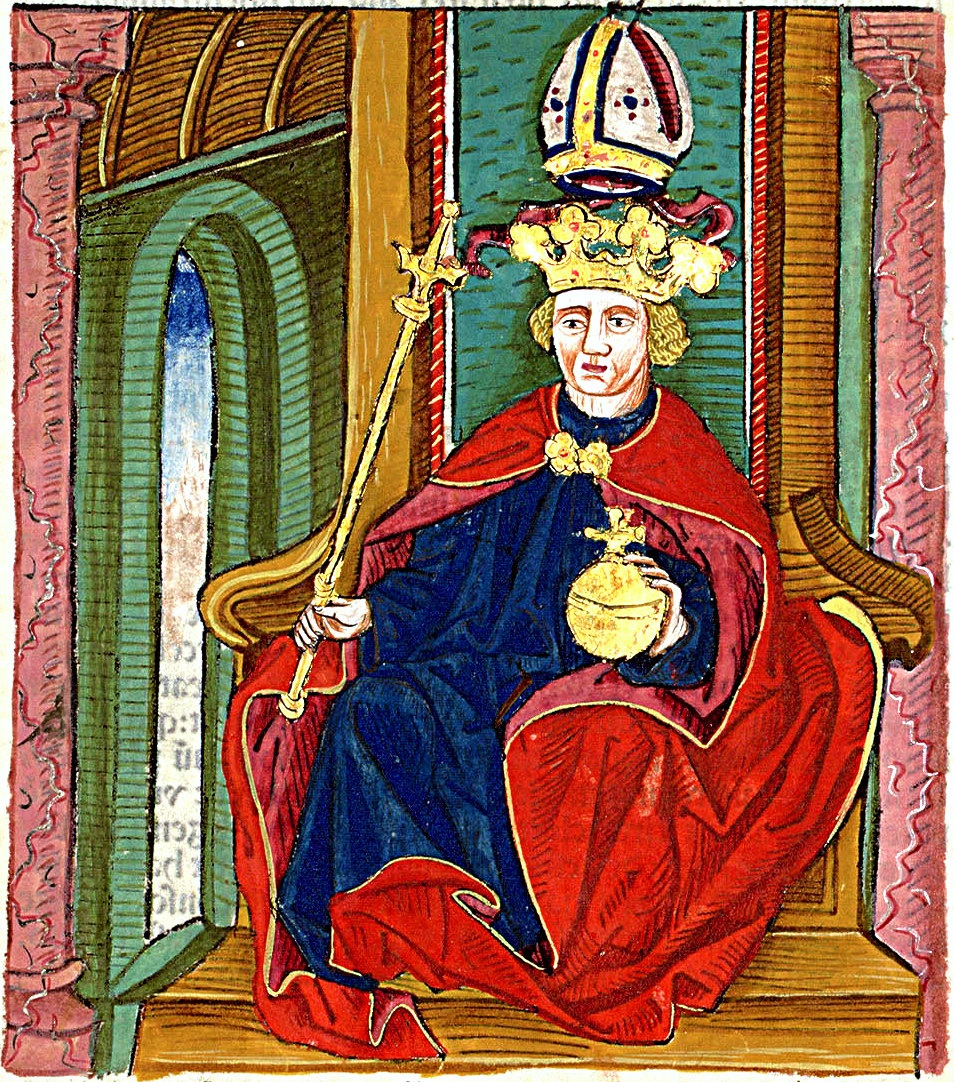
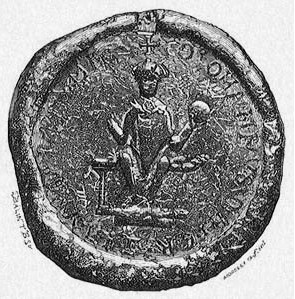
Coloman the Learned, also known as the Book-Lover or the Bookish, was King of Hungary from 1095 and King of Croatia from 1097 until his death in 1116. He is noted for his administrative reforms, his handling of the First Crusade's passage through Hungary, and his long conflict with his brother Álmos.
- born
- c. 1070
- died
- 3 February 1116
- field
- Monarchy
- nationality
- Hungarian
- known_for
- King of Hungary and Croatia; decrees governing taxation, trade, and religious relations; first Hungarian king to renounce control of appointment of prelates
Lore & Background
Coloman faced at least five plots by his brother Álmos to dethrone him. In retaliation, he seized Álmos's duchy in 1107 or 1108 and had Álmos and his son Béla blinded around 1114. Hungarian chronicles from the reigns of Álmos's descendants depict Coloman as bloodthirsty, but the contemporaneous chronicler Gallus Anonymus called him 'the most well-versed in the science of letters among all the kings of his day.' Coloman's decrees governed taxation, trade, and relations between Christian and non-Christian subjects, remaining unmodified for over a century. He was the first Hungarian king to renounce control of the appointment of prelates.
Reader's Guide
Coloman's reign is significant for consolidating Hungarian rule over Croatia and for his legal and administrative reforms. His decrees, which remained in force for more than a hundred years, regulated taxation, trade, and the status of non-Christian subjects, reflecting a pragmatic approach to governance. His handling of the First Crusade demonstrated both firmness and diplomacy: he destroyed unauthorized bands but allowed the main army to pass, minimizing disruption to his kingdom. The conflict with his brother Álmos, culminating in the blinding of Álmos and his son, cast a long shadow over his reputation, as later chronicles written under Árpád dynasty descendants portrayed him negatively. Nonetheless, contemporary sources praised his learning, and his decision to renounce royal control over church appointments marked a notable shift in church-state relations. The Pacta conventa, though of disputed authenticity, became a foundational document for Croatian-Hungarian relations.
Did You Know?
- Coloman was prepared for a church career and was appointed bishop of Eger or Várad in the early 1090s.
- He was the first Hungarian king to renounce control of the appointment of prelates in his realms.
- His decrees governing taxation, trade, and relations between Christian and non-Christian subjects remained unmodified for more than a century.
- The contemporaneous chronicler Gallus Anonymus described him as 'the most well-versed in the science of letters among all the kings of his day.'
Legislative Reinforcement of Restrictions
Coloman's reign (1095–1116) marked a significant tightening of the legal framework governing Jewish life in Hungary. As the successor to Saint Ladislaus, he inherited a decree issued by the Synod of Szabolcs in 1092, which had originally barred Jewish men from taking Christian wives or holding Christian slaves. Coloman went further, renewing that decree and layering additional prohibitions on top, specifically targeting the employment of Christian servants and domestics in Jewish households. This legislative act was not an isolated Hungarian invention; the same prohibitions had circulated across Christian Europe since the fifth century, and Saint Ladislaus had merely transplanted them into Hungarian law. By reinforcing and extending these restrictions, Coloman positioned himself as a firm enforcer of the boundaries between Christian and Jewish communities, ensuring that the social and domestic spheres remained strictly separated under royal authority.
Confinement to Episcopal Cities
One of the most consequential administrative decisions of Coloman's reign was his restriction of Jewish residents to towns that housed episcopal sees. The probable rationale was to place Jewish communities under the continuous watch of the Church, ensuring that clergy could monitor compliance with the various decrees governing their conduct. This represented a notable shift from the earlier pattern, in which Jewish settlers had formed small, scattered communities across the kingdom without centralized oversight. By concentrating them in episcopal cities, Coloman effectively embedded Jewish life within the existing ecclesiastical infrastructure, subjecting it to perpetual institutional scrutiny. The decision underscored a king who viewed the Jewish population not as autonomous citizens but as a group requiring constant religious supervision. It also reflected the broader medieval European trend of defining the spatial and social boundaries of Jewish existence through royal and ecclesiastical decree.
Confrontation with the Crusaders
Shortly after Coloman promulgated his restrictive decree, a violent external threat reached Hungary. Crusaders passed through the kingdom, but the Hungarian population showed no sympathy for their cause. Coloman himself took the further step of actively opposing the Crusaders. The Crusaders, infuriated by this resistance, turned their aggression toward Hungarian cities, attacking several settlements. The chronicler Gedaliah ibn Yaḥya recorded that the Jewish communities in those targeted cities suffered severely as a result. This episode placed Coloman in a complex position: his own legislative program had already curtailed the rights of the Jewish population, yet the very communities he had confined to episcopal cities were now exposed to external violence that his opposition to the Crusaders had provoked. The incident laid bare the vulnerability of Hungary's small Jewish settlements, which lacked the military strength to defend themselves against armed foreign forces.
The Jewish Communities He Inherited
When Coloman ascended the throne in 1095, succeeding Saint Ladislaus, the Jewish population of Hungary was still in a relatively early stage of settlement. These communities existed as small, dispersed settlements rather than the large urban populations that would characterize later centuries. They had no learned rabbis to guide their religious life, yet they maintained strict observance of all Jewish laws and customs. Their ritual practices faithfully mirrored those of contemporary German Jewry, suggesting strong cultural connections across the region. The broader Jewish presence in the territory stretched back to Roman times, with stone inscriptions and artifacts attesting to communities in multiple cities—Brigetio, Aquincum, Intercisa, Sopianae, and others—centuries before the Hungarian tribes arrived in the Carpathian Basin. The Intercisa tablet, for instance, named a synagogue leader during the reign of Alexander Severus, while a third-century gold scroll amulet inscribed with the Shema prayer was unearthed in 2008 at Féltorony. By the time of Coloman's reign, Jews were already engaged in commerce, and the kingdom's legal framework was being shaped to constrain their established presence.
Gallery
More in Reformers And Leaders Of The Americas And Beyond 1-24
Elsewhere in the Reformers And Leaders Of The Americas And Beyond universe
Spotted an error? Know more?
This is a living reference — every entry is fact-audited, and reader corrections feed straight into our audit queue. Suggest an edit · See this site's audit record