Afonso I of Kongo
Sixth ruler of Kongo who centralized power and promoted Christianity.

Samhanin · CC BY 3.0
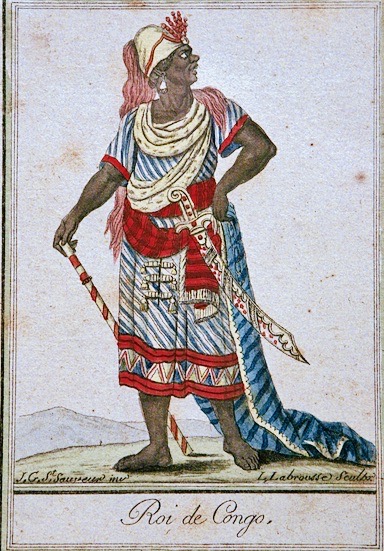
Mvemba a Nzinga, also known as King Afonso I (c. 1456 – 1542 or 1543), was the sixth ruler of the Kingdom of Kongo from the Lukeni kanda dynasty. He reigned from 1509 to late 1542 or 1543, centralizing governmental power, expanding the kingdom's borders, and aggressively converting Kongo to Christianity. His reign saw increasing cultural, economic, and religious exchanges with Portugal, including an expansion of the Atlantic slave trade.
- born
- c. 1456
- died
- 1542 or 1543
- field
- Monarchy, Diplomacy, Religion
- nationality
- Kingdom of Kongo
- known_for
- Centralizing Kongolese monarchy, converting Kongo to Christianity, expanding the kingdom through war, and fostering relations with Portugal
Lore & Background
Born around 1456 as Mvemba a Nzinga, he was the son of King Nzinga a Nkuwu. In 1491, while ruling the province of Nsundi, he was baptized as Afonso after his father converted to Christianity. He studied with Portuguese priests for ten years. When his father later denounced Christianity, Afonso welcomed the priests into Nsundi and ordered the destruction of traditional art objects that might offend Portuguese sensibilities.
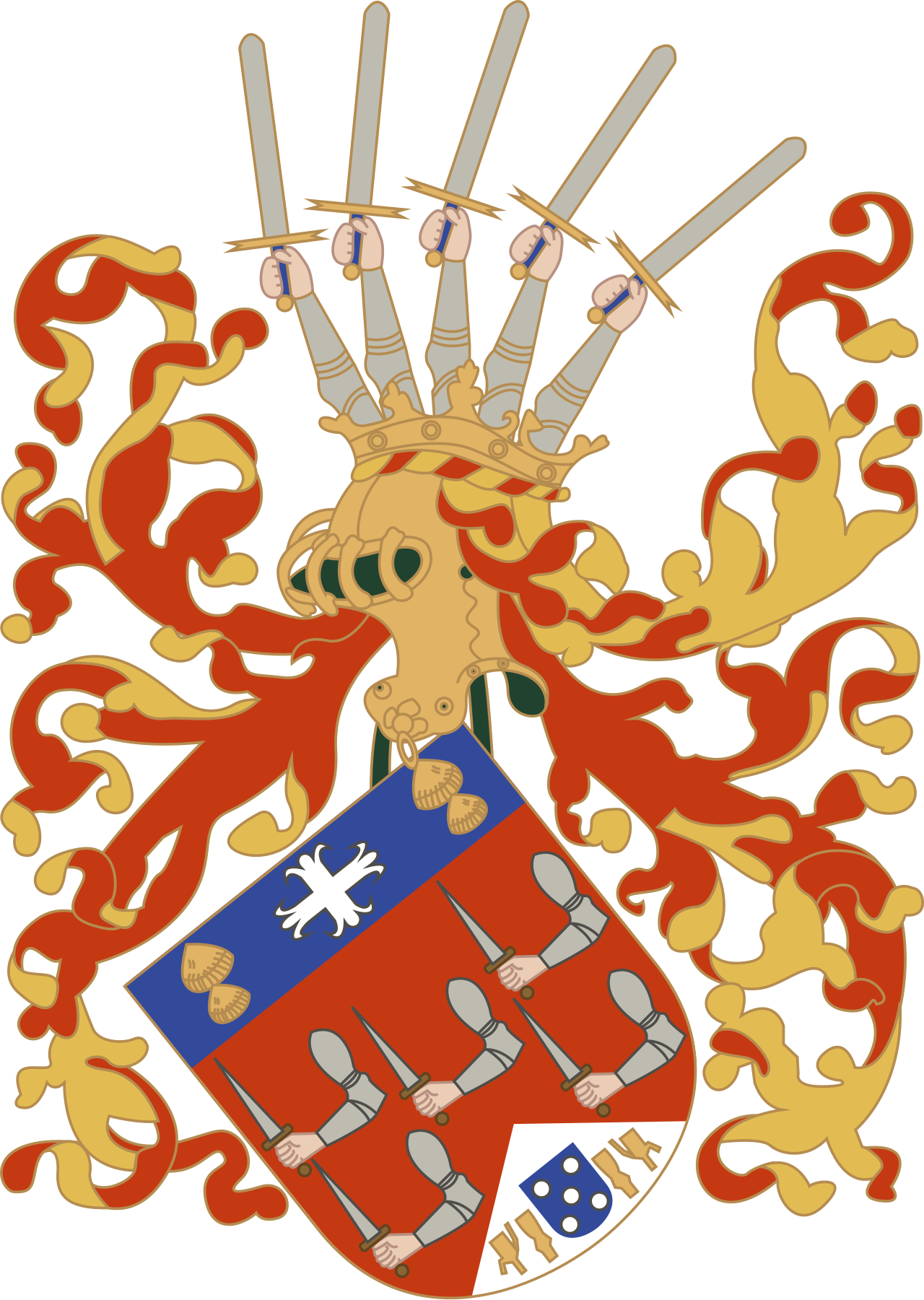
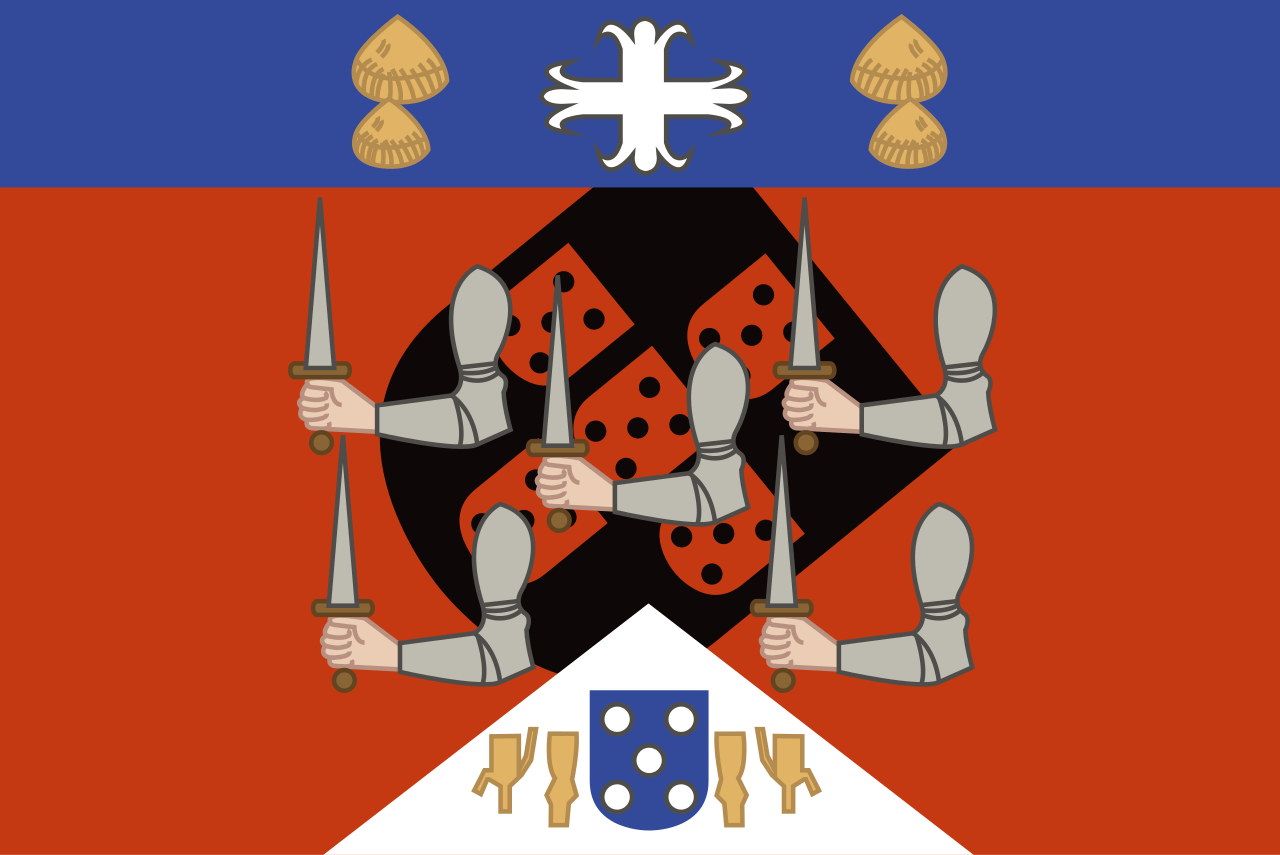
Upon his father's death in 1506, Afonso prevailed in a brief civil war against his half-brother Mpanzu a Kitima. The victory was attributed to a miracle involving the apparition of Saint James the Great and five heavenly armored horsemen. Mpanzu was killed during the battle. Afonso then made Christianity the royal faith and immortalized the miracle in the kingdom's coat of arms.
As king, Afonso centralized power in Mbanza Kongo, curtailed the nobility, and expanded borders through war. He launched campaigns to the south and east, enslaving captives and collecting tribute. He strengthened ties with provincial kingdoms ruled by his kin. Trade with Portugal grew, including ivory, copper, palm cloth, and an increasing number of slaves. By the 1510s, Afonso exchanged military assistance for a share of slaves taken in wars. He sent embassies to Lisbon and Rome and corresponded with European leaders.
Reader's Guide
Afonso I of Kongo is significant for transforming the Kingdom of Kongo into a centralized, Christian state with expanded borders and increased international engagement. His reign marked the height of Kongo's early interaction with Portugal, blending Catholic conversion with traditional governance. He used military expansion to fuel the economy, supplying slaves and tribute to the Portuguese in exchange for support and trade goods. However, his later reign saw growing caution toward Portuguese influence, though relations remained close. Afonso's legacy includes the establishment of Christianity as the royal faith, the centralization of monarchy, and the integration of Kongo into the Atlantic world. His diplomatic efforts—sending embassies to Lisbon and Rome—set a precedent for Kongolese engagement with Europe. The slave trade expanded under his rule, with regulations prohibiting the sale of Kongolese freemen and export of female slaves. His reign ended with his death in 1542 or 1543, succeeded by his son Pedro I.
Did You Know?
- Afonso I was baptized in 1491 after his father converted to Christianity, taking the name Afonso.
- He won a civil war against his half-brother Mpanzu a Kitima, with victory attributed to a miracle involving Saint James the Great.
- He sent Kongolese embassies to Lisbon and Rome and corresponded with political and religious leaders in Europe.
- By the 1510s, Afonso exchanged Portuguese military assistance for a share of slaves captured during Kongo's wars of expansion.
The Throne of the Kilukeni
Afonso I inherited a throne whose legitimacy was woven from a marital alliance forged around 1375. Nimi a Nzima, ruler of Mpemba Kasi and Vungu, united his lineage with that of Nsaku lau, sovereign of the Mbata Kingdom, through the marriage of his daughter Lukeni lua Nsanze. Their son, Lukeni lua Nimi, launched the southward expansion that gave the kingdom its name, establishing a base on the mountain Mongo dia Kongo. Every ruler who followed claimed descent from this founding lineage, and together they were known as the Kilukeni. This house held the throne without serious opposition until 1567. The sacred burial ground near the centre of the Kwilu Valley, where the early elite were interred, carried such spiritual weight that the Italian Capuchin Girolamo da Montesarchio, visiting between 1650 and 1652, recorded that merely gazing upon the site was considered fatal. Afonso I sat atop a dynasty whose roots reached back to these ancient alliances and hallowed stones.
Architecture of Power
The realm Afonso I governed was a layered political organism. At its apex stood the Manikongo, the Portuguese rendering of the KiKongo title Mwene Kongo, meaning lord or ruler of the Kongo kingdom. Beneath him, several core provinces were administered by governors drawn from the royal family or other noble houses. These governors served terms set by the king and held the authority to appoint their own clients to lower offices, cascading down to village-level leadership chosen locally. Crucially, the system preserved a vestigial electoral element: when Lukeni lua Nimi cemented his alliance with Vunda, a subordinate ruler of Mpemba, he granted Vunda the status of elector to the kingdom. Over time, as centralization deepened, the allied provinces shed real authority until their powers became purely symbolic. By 1620, Mbata, once a co-kingdom in the original founding pact, was reduced to the honorific Grandfather of the King of Kongo. Afonso I presided over a system still in the process of consolidating, where old partners retained ceremonial weight even as the Manikongo's grip tightened.
The Kingdom's Reach
At the height of its power, the territory Afonso I claimed stretched from the Atlantic coastline in the west to the Kwango River in the east, and from the Congo River in the north down to the Kwanza River in the south. This vast span encompassed what are now northern Angola, the western portion of the Democratic Republic of the Congo, southern Gabon, and the Republic of the Congo. Beyond these core provinces, the kingdom's sphere of influence pressed against neighbouring polities: Ngoyo, Kakongo, and Loango to the west, and Ndongo and Matamba to the south, the latter two situated in what would later become Angola. The 16th-century tradition captured the transformation succinctly: kingdoms that in ancient times had separate kings now stood as subjects and tributaries of the Kongo ruler. Afonso I's domain thus represented the culmination of a centuries-long process of consolidation that began with the small polities of the western Congo Basin and the Seven Kingdoms of Kongo dia Nlaza to the east.
The Long Shadow
Afonso I's kingdom endured as an independent state from roughly 1390 until 1862, when it began functioning intermittently as a vassal of the Kingdom of Portugal. In 1914, following the Portuguese suppression of a Kongo revolt, Portugal abolished the titular monarchy outright. Yet the title of King of Kongo was restored between 1915 and 1975 as an honorific stripped of real governing power. The remaining territories were absorbed into the colony of Portuguese Angola and the Independent State of the Congo. Oral traditions about the kingdom's early history were first committed to writing in the late 16th century, with especially detailed versions recorded in the mid-17th century by the Italian Capuchin Giovanni Cavazzi da Montecuccolo. Modern scholarly recording of these traditions began in the 1910s with Mpetelo Boka and Lievan Sakala Boku writing in KiKongo, later extended by Redemptorist missionaries such as Jean Cuvelier and Joséph de Munck. Today, the Bundu dia Kongo sect advocates reviving the kingdom through secession from Angola, the Republic of the Congo, and the Democratic Republic of the Congo, a testament to the enduring resonance of the throne Afonso I once held.
Gallery
More in Reformers And Leaders Of The Americas And Beyond 1-24
Elsewhere in the Reformers And Leaders Of The Americas And Beyond universe
Spotted an error? Know more?
This is a living reference — every entry is fact-audited, and reader corrections feed straight into our audit queue. Suggest an edit · See this site's audit record